Digital Certificates Learners Keep: Open Badges 3.0 & Verifiable Credentials
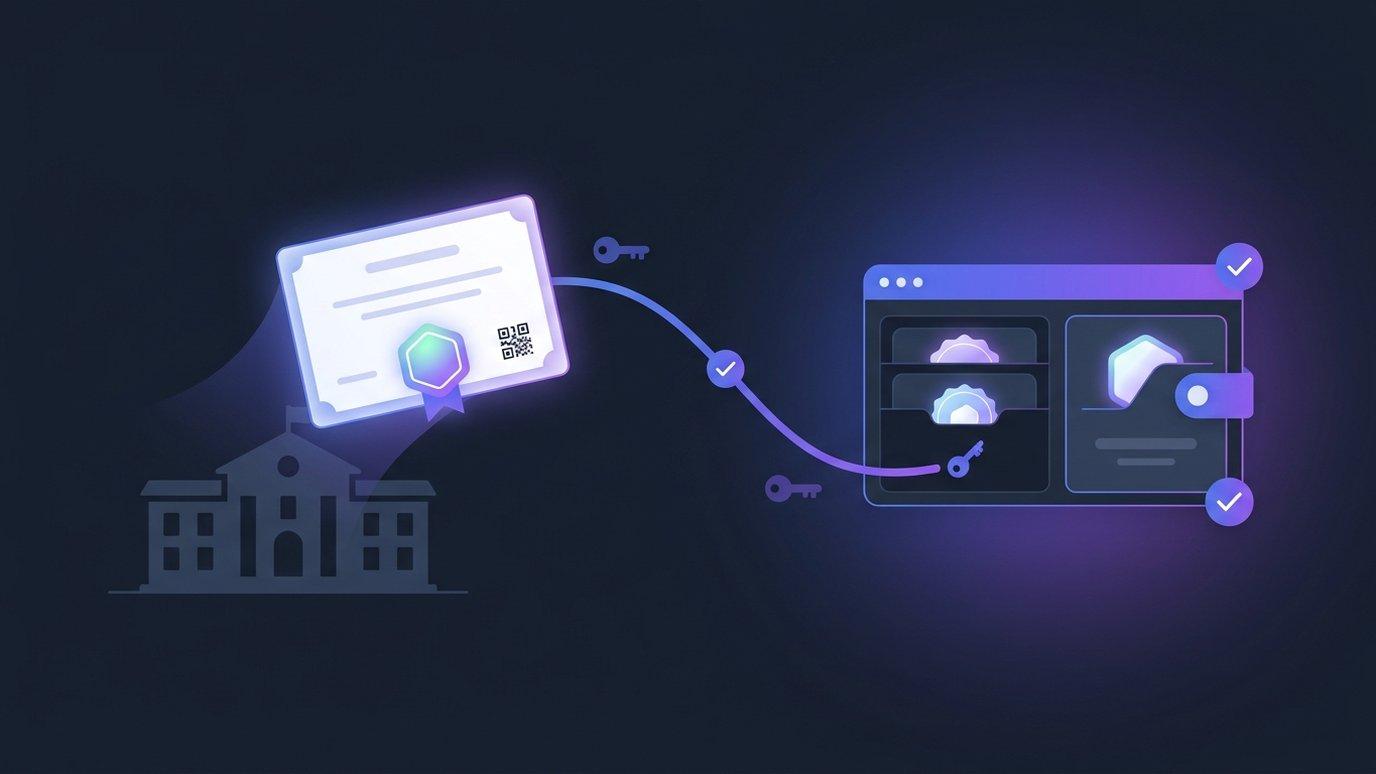
Ask what happens to a learner's certificate five years after they finish your course. If the answer is “it's on their profile page — as long as we keep paying for the LMS,” the certificate isn't really theirs. Credentials should outlive enrollments, survive platform changes, and be checkable by an employer without phoning your office.
The certificate that isn't yours
Traditional LMS certificates have two weaknesses. They're trapped — viewable only inside the issuing platform — and they're unverifiable — a PDF anyone could have edited. Both problems have mature, open-standard solutions now, and they're worth insisting on when you choose a platform.
Three layers of a modern certificate
EduGears AI LMS issues every completion certificate in three complementary forms:
- A branded PDF — the familiar, printable certificate carrying your academy's name and design.
- A public verification page — every certificate carries a QR code and a short verification code; scanning it lands on a page, branded to your academy, confirming who was certified, for what, and when.
- An Open Badges 3.0 verifiable credential — a cryptographically signed, machine-readable credential the learner downloads and keeps. This is the portable layer: it can be presented to badge wallets, credential platforms, and employers, and verified by anyone — with or without us.
How verification works under the hood
The portable credential follows the W3C Verifiable Credentials model, issued in the Open Badges 3.0 profile as a signed VC-JWT. Concretely: the credential's claims — learner, course, issuer, date — are signed with an Ed25519 key belonging to the issuing academy. Any verifier can fetch the academy's published public key, check the signature, and know the credential is authentic and untampered. No login to our platform required, no API call to us required.
That last property is the point: verification doesn't depend on EduGears AI being reachable, or even existing. The math and the published key are enough.
Issued under your identity, not ours
Each tenant academy gets its own signing keypair and its own decentralized identifier — a did:web rooted at the academy's own domain. The DID document (served at /.well-known/did.json on your domain) publishes your verification key to the world. So when a credential is checked, the issuer that appears is your academy, at your domain — the white-label story extended all the way into cryptographic identity.
Do you need a blockchain for this?
Short answer: no. Blockchain-anchored certificates solve the same tampering problem with heavier machinery — public signatures already make a credential independently verifiable, and the W3C/Open Badges stack is what education platforms, badge wallets, and HR systems actually interoperate with today. You get the practical benefits people associate with “blockchain certificates” — tamper-evidence, no central gatekeeper for verification, learner ownership — on open standards designed for education.
FAQ
What do learners actually receive?
A branded PDF certificate, a QR-coded public verification link, and a downloadable Open Badges 3.0 credential file they can store or present to any wallet or platform that speaks verifiable credentials.
What if a certificate needs to be revoked?
The public verification page always reflects the certificate's current status in your academy's records, so it is the authoritative check for currency as well as authenticity.
Does this require any setup?
No. Keys and the DID document are provisioned automatically per tenant; issuing works out of the box, and the PDF certificate is always produced even if the credential layer is unavailable.
Посмотрите вашу академию на EduGears AI LMS
Забронируйте демонстрацию, и мы покажем вам живого арендатора, оформленного как ваша академия — ваше имя, ваши цвета, ваш домен.
Забронировать демонстрацию →